


Belgium was not in my list of next destinations, but as I had to go there for a Toastmasters meeting, I decided to extend my stay for a week and discover it. Belgium is a country, which is not known for their touristic interest (especially for a one-week long trip), but that would allow me to be more relaxed during that time, which is also nice. After checking with friends with some local expertise, I decided to establish my base in Brussels after the 3-day meeting in Leuven, and do day-trips from there, and then go to the Netherlands in the weekend.
 Belgium is a quite complex country in spite of its small size. Nowadays, we see a clear language difference: the Northern people speak Flemish (Dutch), while the Southern ones speak French. The only officially bilingual city in the country is Brussels. This is the outcome of a very convulse history with many countries invading this area for centuries (for instance, French language in Belgium is the result of an invasion back in the 5th Century). Belgium has been under Spanish, Austrian, French and Dutch rule, before its final independence in 1830.
Independence did not bring them peace, though. Belgium was also invaded in both World Wars. It was after the World War II, in 1948 that together with France, Germany, and the other countries in the Benelux, the first seeds of the European Union were planted. The goal was to avoid more wars in Europe, and the vehicle to do so was an agreement on one of the most important resources in Europe: the coal and the steel in Central Europe. It all began with a cooperation agreement on the coal and steel, led by Robert Schuman (French Foreign Affairs Minister), in 1950. Their idea was that, being the coal and the steel strategic assets, if they agreed on it, it would be impossible to enter again in a war. This first intention evolved into more aspects, like an economic union or the citizenship, as well as growing the number of countries, and the main institutions of the European Union were established in Brussels: the Parlament (although its official headquarter is Strasbourg), and the Commission, apart from several agencies.

Apart of Europe HQ, Belgium is worldwide known for one more thing: beer. They have hundreds of them, with a specific glass for every single beer to boost the characteristics of the beer. Everything has a beginning and beer history in Belgium is quite interesting. In the Middle Ages, water quality was not that good, and Saint Arnold (who happens to be the patron saint of the brewers) promoted that people drank beer instead of water, so that some diseases could be avoided. Beer was at that time brewed mainly in the Monasteries, and this production started to happen as well outside the religious circles. In the 19th century, the monasteries brewed again as a way to get funds, due to a bad financial situation provoked by the religious crisis. Nowadays, beer production, even if originally made by monks, has been outsourced, except six of them, the Trappist, which are still brewed in active abbeys: Chimay, Orval, Westmalle, Rocheforst, Achel, and Westvleteren.
Travelling in this area has several common items. One of them are the Béguinages/Beginjhofs, enclosed urban villages, which used to host beguines, single women, who although not making any formal religious vows, formed monastic-like communities where they could live as long as they remain unmarried, which normally meant the whole life. The Belfries are towers that seem to be part of churches, but they are not, as they were built to celebrate civic liberties and wealth in the Middle Ages. Food-wise, I discovered their love for the mussels, which are served with fries (they claim to have invented them too) in almost any place, and of course, waffles and chocolate are also known worldwide.  Going back to the actual trip, I started it in Leuven (A), a small town East of Brussels, for a Toastmasters weekend. It is home of the first university in Belgium, and its Town Hall tried to compete with the Brussels’ one in size, although it would be better off in other categories, like its ornate Gothic facade. Its Béguinage belongs nowadays to the University, and is used to accomodate teachers and students.


After Leuven, I moved to Brussels, which seemed to me an interesting city to spend some months or even years as an expat, but probably not the best place to settle down. From what I heard, you should keep your eyes open and safety is not one of their strengths (although I did not experience anything wrong myself). Brussels top sight is of course the Grande Place. It is an extremely nice spot, with the different guild houses competing one to each other in beauty, and a huge town hall.

In the city centre, the Galeries St.Hubert are also worth a visit, the mandatory Manekken Pis (really small one), and the nice atmosphere at the Place Sainte Catherine. The EU-Area is interesting from the point of view that most of the citizens in Brussels work in something related to the institutions, and it also hosts the Parlamentarium, a museum about the European Union which can make you spend a complete morning reading and watching all the info they have. Last but not least, a visit to the Atomium to see this original construction built in 1958 for the Expo is worth the long tram ride.


From Brussels, I did two day trips. The first one was to Brugge and Gent, which are the cities that attract most tourists, and there is a very good reason for that. Both of them keep a medieval atmosphere that makes its visit very entertaining, although most of them were destroyed after the wars, and were reconstructed thinking on the tourism. Brugge (1) was part of the Hanseatic League back in the 14th Century, as its harbour was one of the major ones in the North of Europe. The merchants at that time used to meet at the Inn of the Van der Buerse family to trade, and from those meetings comes the name “Bourse”, which is stock market in French. During the 15th century the Zwin, a big channel that arrived to Brugges, silted up and Brugge had no access to the sea, going through a deep economic crisis till the 20th Century brought the tourism back to the city. Brugge has a number of interesting buildings, and sights, but I would highlight the Gotische Zaal in the Stadhuis.


 On the other hand, Gent (2) looks a bit more “normal”, with a nice combination of old reconstructed buildings with newer and more functional ones. Its importance in history is out of question, as it even was the third largest medieval city, only after Paris and Constatinople. Gent also went through some centuries of recession, till the Industrial Revolution brought a number of flax and cotton mills to the city. If you like fortresses, its Belfort is a really nice piece to visit; and the same applies with the Dulle Griet bar in the Vrijdagsmarkt if you like beer.
  The second day trip covered the East part: Liège and Namur. These are not extremely touristic and not a must in Belgium, I must admit. Liège (3) is today a modern city with a river, and I found it a probably nice place to live, but not to visit. Historically-wise, it was a historic religious center, governed by the Prince-Bishops until the end of the 18th Century, and it has always been a key place for industry: arms and gunpowder till the 17th Century, and home of steel and glass factories since the 19th Century. What I really liked was the way that the train took from Namur to Liege close to the river Mense and with really nice views, before arriving to Santiago Calatrava’s main train station. Namur (4) is a small town with just one interesting item: a fortress occupies a big rock in the middle of the city, which can be visited on your own, offering you nice views of the rest of the city, but nothing impressive either.

 After a week in Belgium, I still managed to pay a quick visit to the Netherlands. We established the base of operations in Leiden (C), a relaxed town, with an important university and full of nice channels.
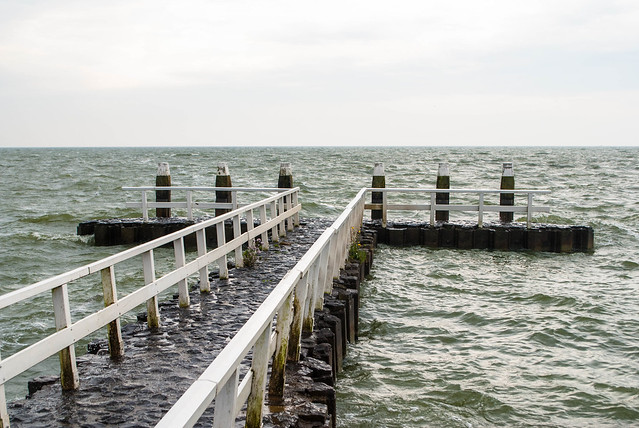
  Our first visit was the Afsluitdijk (5), the Closure Dike, in the north of Amsterdam. Driving through it is quite spectacular, as it is a 32 km-long dike in the middle of two seas: North Sea and the Ijsselmeer. It is one of the main constructions that allowed a big portion of the current Netherlands to emerge. Being in a windy day, with waves at both sides of the dike, it is hard to imagine how they could built it in just 5 years, and almost a century ago… between 1927 and 1932.
 Saturday afternoon was the right moment for The Hague (6). The city is alive, and hosts the International Court. From a tourist point of view, its Begijnhof is worth a visit, but what really surprised me was the beach area. It has a number of restaurants and many other attractions for the spare time, while the sun sets behind the oil platforms in the North Sea.

Haarlem (7) was the perfect closing for the week on Sunday: channels, the Great Church, mills and a well-preserved Beginjhof, before returning to the Charleroi airport.
[AFG_gallery id=’11’]
Otro viaje a un destino poco frecuente: Taiwan. Apenas dos días sin tiempo más que para captar someramente el sabor del cuarto país en la región fuera de Europa que más he visitado en toda mi vida.

Taiwan está ubicado en la isla de Formosa (nombre puesto por los portugueses que estuvieron por allí), en ese mar que en cada lado del mismo se llama de una manera distinta. Una isla de unos 500 km de largo y unos 200 km de ancho, que tiene una cordillera que la atraviesa longitudinalmente con alturas de más de 3000 metros. Políticamente hablando, Taiwan es un lugar bastante particular debido a su relación con China. Ambos territorios consideran que son la auténtica China y que “los otros” no están siguiendo el camino correcto. No es una independencia al uso en el que se busca la separación, sino que ésta surgió en su momento fruto de una guerra civil que, en cierto modo, sigue abierta; y una unidad territorial que ambos aspiran a tener. Sobre todo, en el lado de China continental, hay mucha gente, además del gobierno, que aspira a que la isla de Formosa vuelva a ser China y que estaría más que dispuesta a alistarse para tal fin (sic).
Hasta hace unos pocos años no había vuelos directos entre China y Taiwan (de hecho, puedo confirmar que no todo el mundo en China sabe que ya existen dichos vuelos), y hoy en día están muy limitados tanto en cantidad como en compañías autorizadas para ello. Hablando de vuelos, imaginaos mi sorpresa cuando tras despertarme de maldormir en el vuelo de ida (desde Estambul), veo que estamos sobrevolando Vietnam (mucho más al Sur que cualquier ruta medio óptima que se os pueda ocurrir) para luego retomar dirección Noreste hacia Taiwan: parecía que estábamos evitando entrar en espacio aéreo chino… y así es: China no permite que sobrevuelen su territorio vuelos con destino Taiwan.

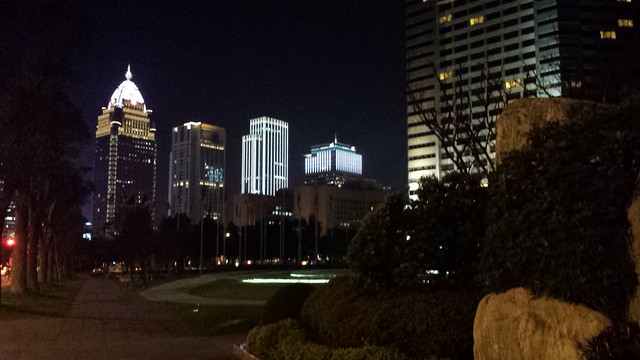
En cuanto a la única ciudad que he visto, Taipei, si te dejaran de repente allí, y no vieras los carteles en chino, podrías perfectamente pensar que estás en una gran ciudad japonesa o coreana. Es una ciudad moderna, pero que no pierde el encanto de las pequeñas calles (como Seúl o Tokio), y con gente prácticamente a todas horas por la calle. Quizás lo que más recuerda a China en sus calles es la alta cantidad de pequeñas motos que pueblan las calles y avenidas. Incluso en el habla, aunque es chino (o eso parece), de vez en cuando se oyen expresiones japonesas, como “Sumimasen” para decir “disculpe” que resulta un tanto chocante al oído no entrenado.
 Turísticamente hablando, no tengo mucho que contar. En 2 noches que estuve en la ciudad no me dio tiempo más que a probar el sistema de bicis públicas (fácil y cómodo porque fui por una zona llana y por calles pequeñas sin nada de circulación, disfrutando una de las cosas que más me gustan de Asia: las calles tranquilas sin dejar de ser seguras) para ver el Taipei 101, otrora el edificio más alto del mundo y ahora relegado a un digno segundo lugar tras el Burj Khalifa de Dubai. El segundo día, tras una copiosa cena, me acerqué al Shilin Night Market, que tampoco me aportó mucho: un mercado callejero con mucha comida (que no probé), y muchas tiendecitas variadas. Y sobre todo, mucha gente.
En cambio, sí que pude observar algunas otras cosas curiosas en los trayectos entre el hotel y el lugar donde tenía las reuniones.
Todos los taxis (y por lo que me dijeron muchos coches privados también) tienen una cámara de vídeo cerca del retrovisor que además de registrar velocidades, graba el comportamiento del vehículo en un momento dado. Por lo que me contaron, esto es tanto para controlar el comportamiento de los conductores de servicios públicos, como para aclarar posibles discrepancias en caso de accidente, ya que las cámaras sirven para dilucidar el responsable del mismo. Esto no descarto verlo en Europa dentro de unos años promovido por las compañías aseguradoras.
La segunda curiosidad, también relacionada con la circulación es su sistema de autopistas. En una isla relativamente tan pequeña y con la comentada orografía, tampoco caben muchas y grandes autopistas, por lo que las dos que tienen son usadas masivamente y van por donde pueden ir, no hay mucha alternativa. Así, hace unos años, la autopista 1, que va de norte a sur uniendo las principales ciudades era un atasco permanente. La idea que se les ocurrió, fue hacer una carretera paralela elevada de unos 100 km para aliviar un poco el tráfico en esa zona. Esto que se dice fácil, les ha tenido que costar una millonada tal que riete tú de los túneles de la M-30.


Cuenca es el río Júcar, y sus acantilados; es las Casas Colgadas (que no Colgantes!); es su Catedral del siglo XIII; es su Ciudad Encantada; y es su historia marcada por estar justo entre Valencia y Madrid, a tiro perfecto para una excursión de día desde ambas ciudades, y perfecta para un finde relajado.

El río Júcar es inevitable no percibirlo ya que es el que causa toda la orografía del terreno, gracias al efecto de su agua y del viento sobre la roca calcárea, que causa ese tajo tan característico. Tajo sobre el cual cuelgan las Casas Colgadas que tanta fama dan a la ciudad, y que parece que se vayan a caer de un momento a otro. Su catedral del siglo XIII gobierna la plaza central de Cuenca y su PORTAL es impresionante; y la Ciudad Encantada es una clase de geología en vivo y en directo. Por supuesto, Cuenca es también comer bien, y protegiéndonos del frío con algo ligero: no dejéis de probar el morteruelo, una pasta hecha con carne de caza que te hará recuperarte de todos los males.


Por último, su ubicación, tan valiosa hoy en día, también lo fue durante la Guerra Civil, por lo que siempre fue objetivo y formó parte de la retaguardia de ambos bandos. Una visita bastante recomendable por lo espectacular de la construcción es el refugio antiaéreo que se construyó para defender a la población de los diarios ataques aéreos alemanes e italianos. Aunque he visitado bastantes refugios antiaéreos, el de Cuenca es, quizás, uno de los más espectaculares ya que fue hecho a base de mazas, barrenas y dinamita, cuyas marcas aún se pueden ver y su ubicación debajo de un monte le da algo especial…. Tan especial que, después de la guerra, y antes de hacerlo visitable, se utilizó para criar champiñones.

[AFG_gallery id=’10’]
After more than 10 times in their airport, it was time to stop for one day in Dubai, and see what the most famous city in the Persian Gulf was all about.
I landed very early on a Friday morning, and started having the first issues. Friday is the rest day in the Muslim countries, and, while hearing to the morning pray in the airport, I discovered that Friday morning people are not expected to take the subway, not even from the airport. So I took a taxi, when it was still dark.
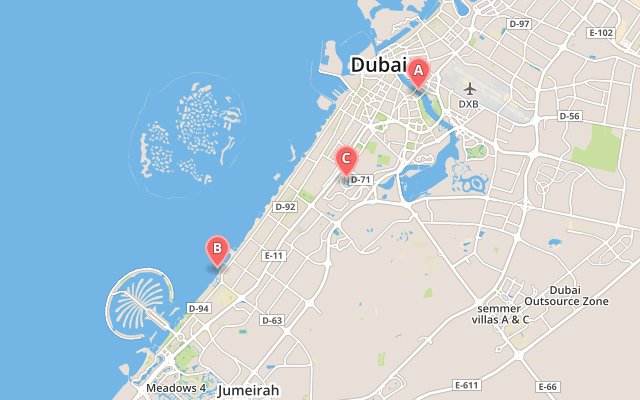
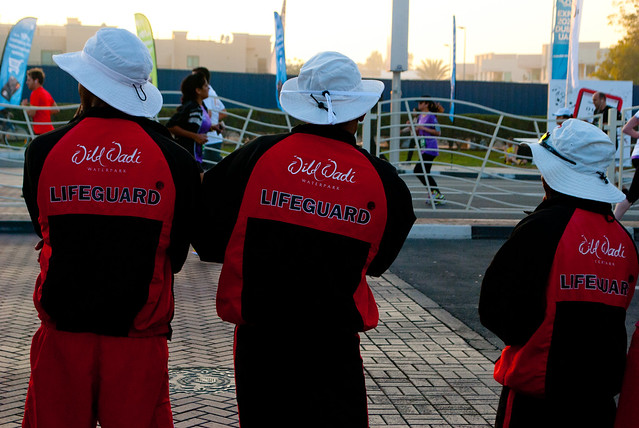 I started going to the Creek (A), where the port is located, and I found a big group from India doing yoga while the air is filled with the praying calls from the Mosques from all over the city, in what it seemed a competition to be heard more than nearby one.
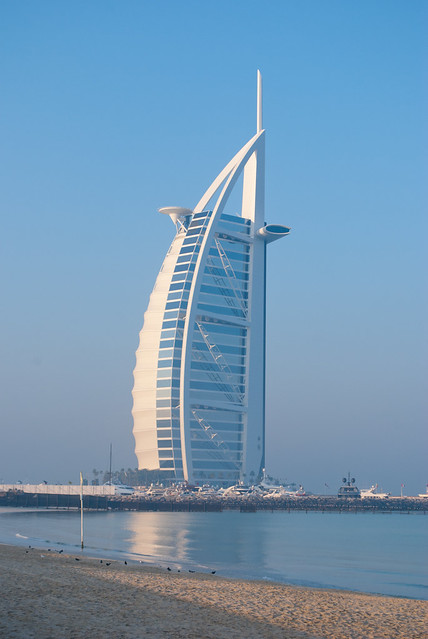
 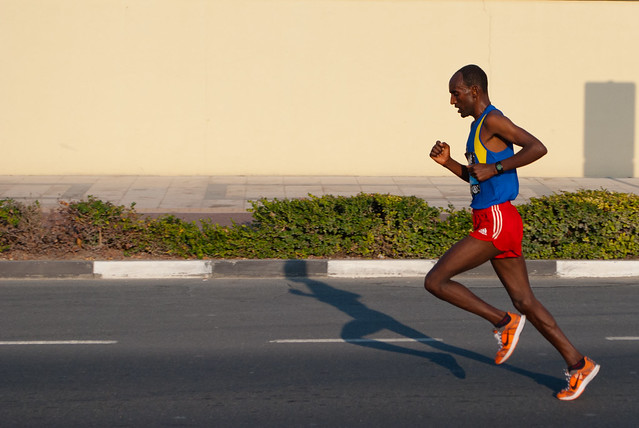 After seeing there was not much else to see for the moment there, my next stop was to go to Jumeirah (B) in the Southern part of Dubai, where the famous Burj Al Arab building sits, and I found that the Dubai marathon was taking place that day. This complicated slightly the logistics for the rest of the day, but I managed to walk around Jumeirah to see the mansions and cars in that (good) area of the city.
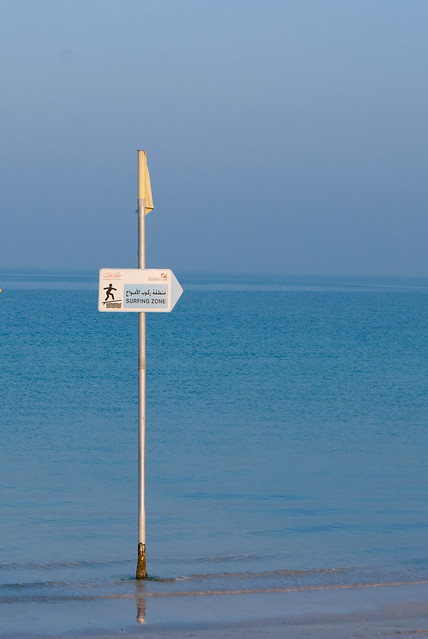
  It is interesting to know that Dubai has some beaches, although not all them are open to the public. Some hotels have their private beaches, and there are some others that although they are open to the public, people have to pay to use them.
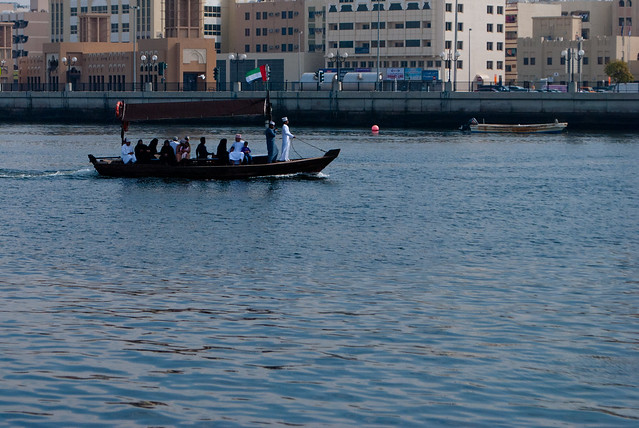
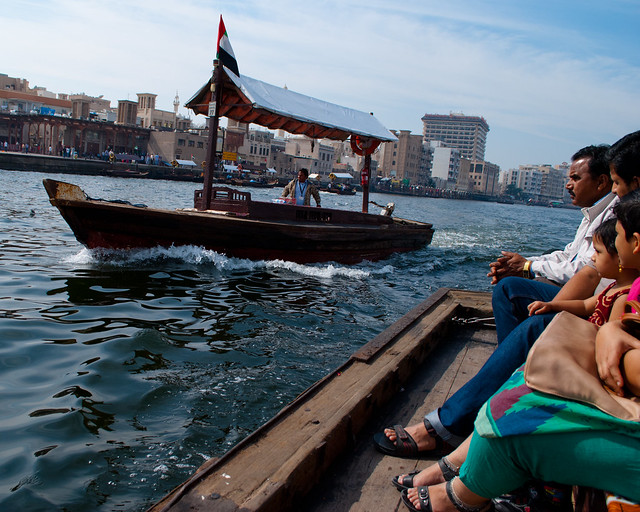
  After some hours, the metro was finally opened, and I discovered something I had seen previously in Japan: an only-women car; and something new: a Gold passengers car, this latter with physical separation from the rest. The next stop was the Creek again to see a different picture. Instead of silence and people doing yoga, it was now crowded of people walking around. The Creek was full with abras, small boats that are continuously crossing to the other side of the Creek, full of people, and total lack of safety, but the distances are short… and I can swim.
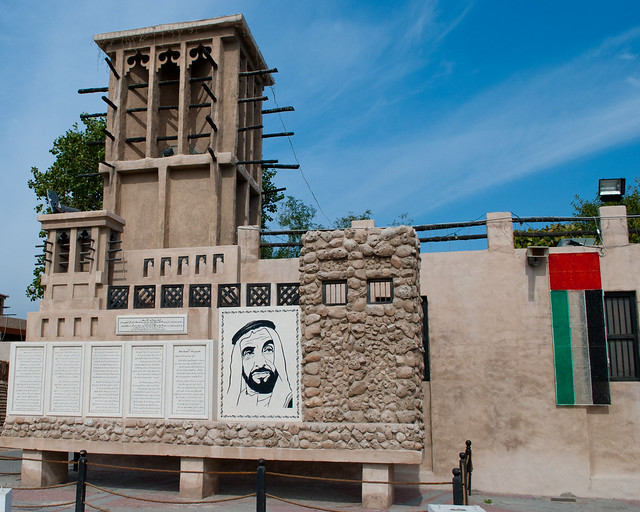
  The old part of the city seems to be a fake, because it has gone through a complete renovation, and I found it not very interesting. On the other hand, it was more interesting to visit the Gold Market. Here you can buy gold per grams, or see the tailors working on the surroundings of the bazaar, where most of the business is developed by Persian merchants, who established here first in the end of the 19th century.
  The evening was the perfect time to go to Burj Khalifa (C), the highest building is the world which was made for the sake of it: there is no need to build such a skyscraper in the middle of the desert, unless you want to show off, which is the case. I was told in a flight many years ago, that the building was going to be named something else, but a couple of weeks before the official opening, the sheikh that had financed the construction asked to change the name to his, in spite of having the whole ad campaign and merchandising products with the previous naming, but who cares…
 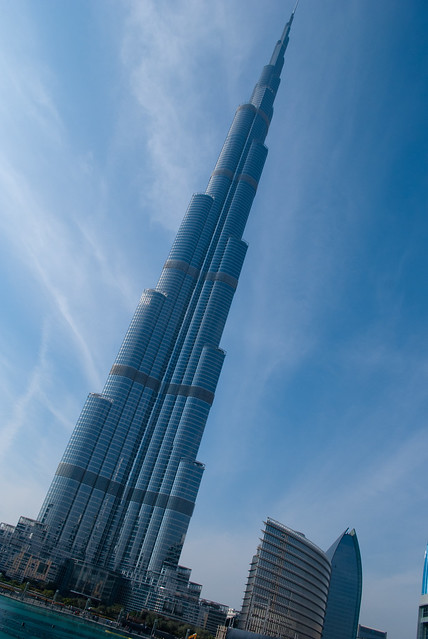 This building is an impressive construction by Adrian Smith, which is seen from the whole city. During the night it is a very narrow set of lights (probably to avoid one of the many Emirates’ Airbus A380 to crash), and during the foggy mornings just a soft shadow.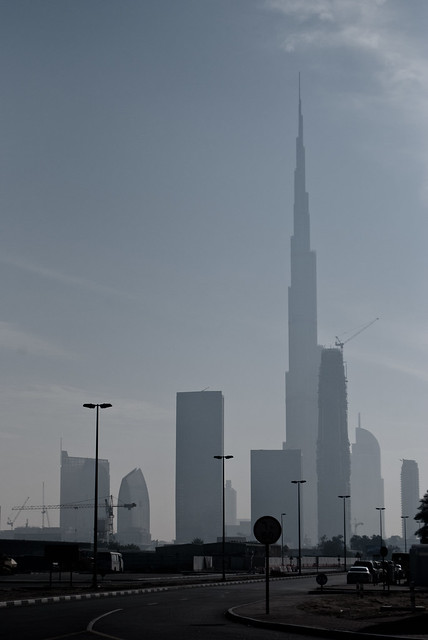
When you are close to it, it is a breathtaking view. It is also recommended to go up and see the sunset (fog permitting), and look down to see how small things are seen from the top of the highest building in the world.
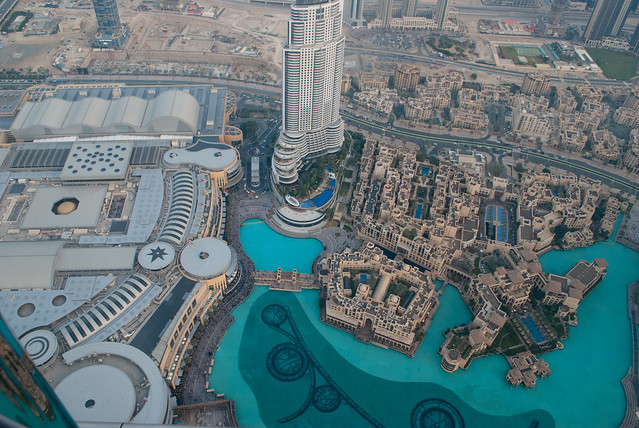
Burj Khalifa is not only the highest skyscraper, but also one of the biggest malls in the World. A huge Aquarium, an ice rink and thousands of shops is worth a visit.

[AFG_gallery id=’9′]