


Salamanca is one of those cities that are a perfect match for a relaxed weekend trip from Madrid. It has a population of roughly 150,000 and 40,000 of them are university students. Its university is the most ancient in Spain (since the 13th Century) and a number of prominent linked to the Literature have lived for some time in this city, like Miguel de Cervantes (Don Quixote), Fernando de Rojas (La Celestina), or Miguel de Unamuno (Niebla). The town centre is easily reachable by walking distance, and hosts one of the biggest concentrations of tapas bars that I have ever seen (vegetarians might have a hard time, though).

If you need to set a place to meet in Salamanca, this will always be “under the clock in Plaza Mayor”. This square, built in the 18th Century, that used to host markets, fairs, and even bullfights, is now widely used as meeting point by locals, tourists, and especially students, who concentrate it in the evenings in small groups sitting on its floor.

Another significant sight in Salamanca is the Universidad Pontificia. A huge building that was under construction for almost 150 years, after the Queen Isabel II decided to create an institution to train the ones that would then go to the New World to spread the Faith. Initially it was intended to be run by the Jesuists, but it could not work as a Catholic University till 1940, as the Society of Jesus was suppressed by Carlos III. Its guided visit is highly recommended, and the climb to its tower gives breathtaking views of the city.


There are many other buildings that also add interest to the visit to the city: the Casa de las Conchas (now a Library, it used to be a Palace of aristocrats), the Monterrey Palace (now belonging to the Casa de Alba), the Roman Bridge, the University Main Entrance (look for a frog -on a skull- and it will give you good luck and results in your studies), the two Cathedrals, the Patio de Escuelas or the Casa de Lis (an Art Deco museum in an Art Nouveau building with amazing views to the Tormes river).

Apart from a beautiful city itself, Salamanca gives you the opportunity to live through its history the history of the country, as it has always been an active culture centre of Spain. Even in the last years, Salamanca was chosen to host the “Archivo de la Memoria Histórica”, part of which was transferred to Catalonia, within the current internal political battle. The street where this archive lies was named Expolio (pillaging) for many years, and now changed to Gibraltar (location not free from dispute, either).

[AFG_gallery id=’5′]

[AFG_gallery id=’4′]
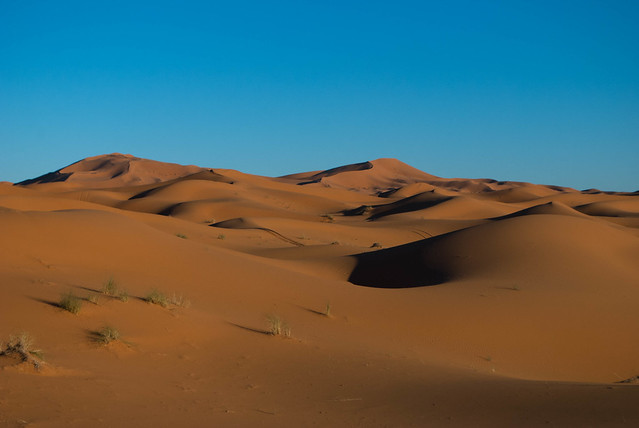
I knew I would be back to Morocco sooner or later, and that it would not be just a city. As I said when I went to Marrakech a couple of years ago, it should be more nature-related, and that was the main excuse for this trip: the desert. Flying to the same city where I had a couple of “issues” in 2010, Marrakech, but soon taking an organized trip to the East to experience the roads and towns of the rural Morocco.

Leaving Marrakech to the East, our bus has to go through the Atlas (G), near to the Toubkal, the highest mountain in the country, normally covered by snow (yes, Morocco does have snow too). Being lucky enough to get the front seats on the minibus, you get to see a lot of things that call your attention on a daily basis.
Donkeys widely used to transport people and other goods. Hitchhikers looking for a ride to the next town. Very frequent police controls (although we did not stop in any of them thanks to the early notice that other drivers made to our driver).
People walking in the middle of desertic roads, many kilometres away from any town. People sitting at sunny side of the road. Shepherds asking the drivers to throw them some water. Children always accompanying their mothers. Men always accompanied by other men. Women carrying herbs, wood, or clothes. Women washing their clothes in the river. Poverty. Too many children not going to the school, and working, or begging the tourists for some money.
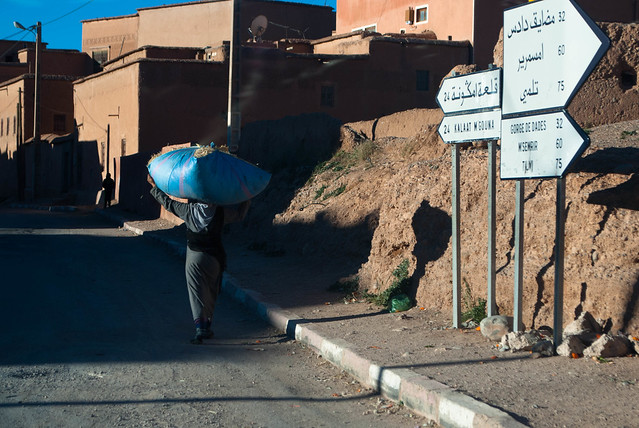
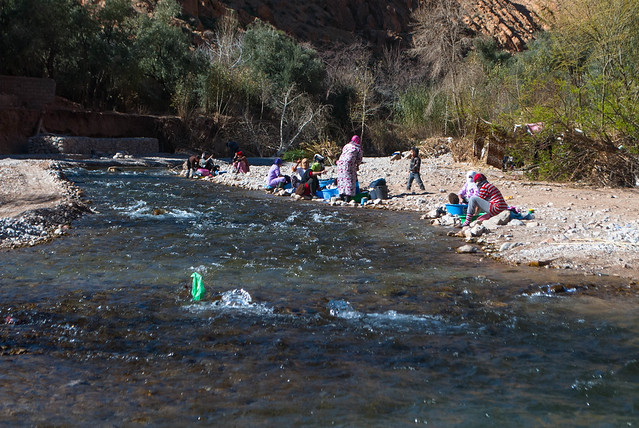

The desertic roads we used crossed many huge ravines, dry today, but that clearly show that heavy rains take place there with certain frequency. Looking at the (main) roads that cross them without any bridge, and the fields being grown on their beds, the effect of a flood there must be huge.
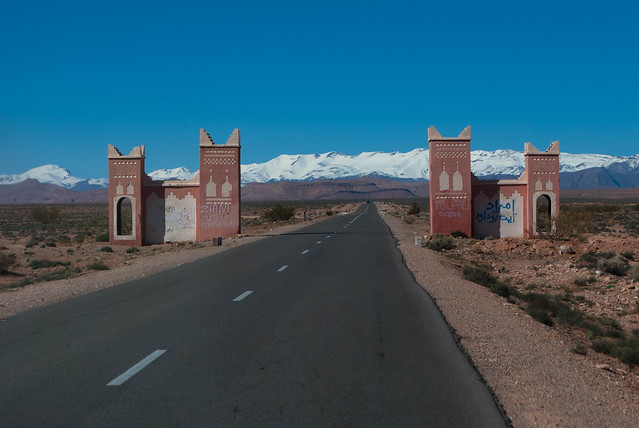
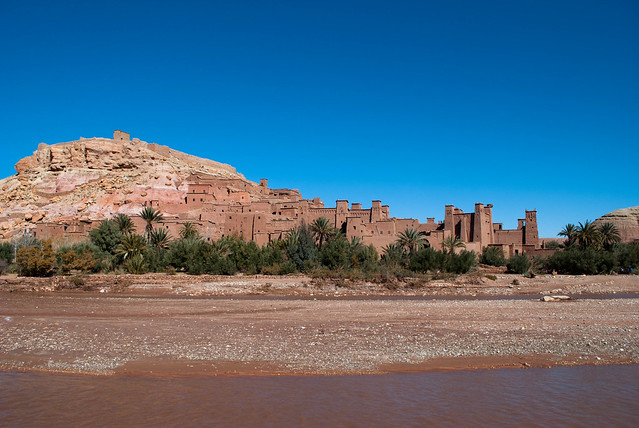
Going back to the touristic route, we did our first stop at Ait Ben Haddou (B). First Moroccan trick: “the entry to the town costs 25 dirham, you can come with me, or just stay here and wait for the group to come back”. It is less than 3 Euro, and we all agreed to proceed with the visit, but we soon realized the guide (whose time was included in the package) had found an additional source of income. There was not such a thing like a ticket in this UNESCO Heritage Kasr (group of kasbahs/Berber houses), that has survived for many centuries, in spite of being constructed with adobe (great material for dry and hot weather, but not very resistant to the rains). It has been used as a scenario for many movies, like Game of Thrones, Gladiator or Lawrence de Arabia.

On our way to the desert, we stopped at the Gorge of Dades (C), and at the Todhra Valley (D). Both of them being impressive natural scenarios, and great examples of how powerful the water is in that environment.
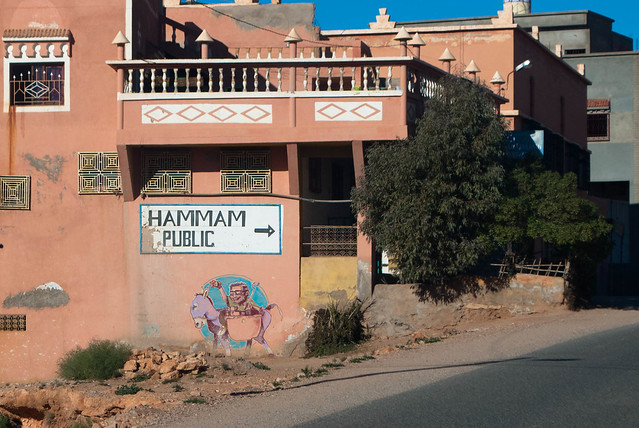
And we finally made it to the desert. Our choice had been the desert (E) close to Merzouga and the border with Argelia. Not the biggest Erg in Morocco, but big enough and most accessible from civilisation. We rode our dromedaries (not camels) through the desert in a caravan while the sun was setting, and the sand colours were changing every minute. I had done this trip for those minutes, and it was worth it… in spite of the inconvenience of riding a dromedary for that long (I will not go into details, but the guides -with better knowledge than us- walked all the way to the camp instead of riding those monsters).

When we arrived to the camp, we were soon called to dinner, and then shared some Berber music around the fire, and under millions of stars not seen from the city.
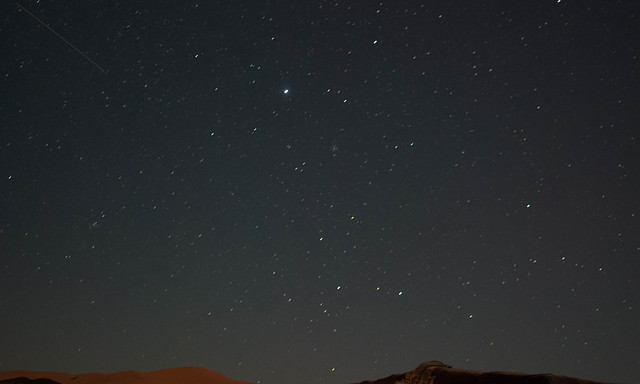
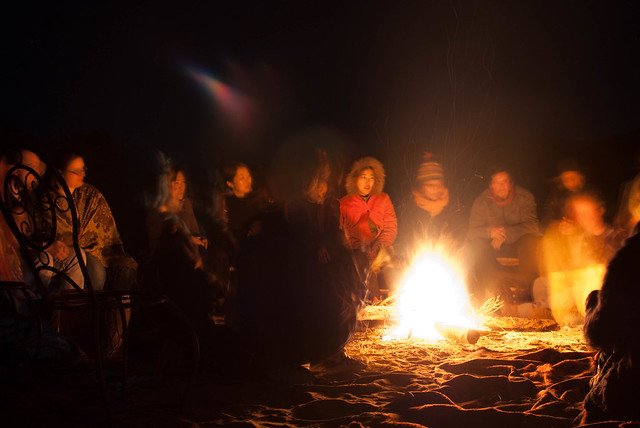
Sleeping in the desert is a cold experience. Riding our dromedaries back before sunrise is even colder. If you ever plan to do this, make sure you bring the following items (especially in winter): gloves, hat, thermal clothes, sleeping bag (you do not want to touch the blankets that they provide you), a backpack, a scarf, a lantern…
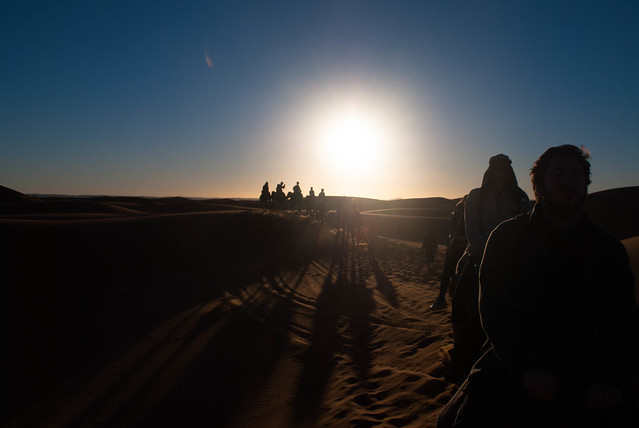
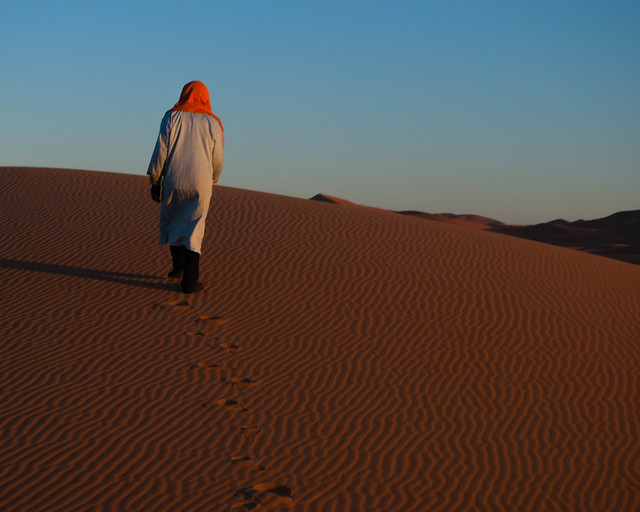
After the desert, we had a nice track of 10 hours to go back to Marrakech, crossing some more rocky deserts, lucky riverside valleys, and the snowed Atlas. Once in Marrakech, we had a couple of days to wander around the zouqs, and visit some of the great monuments this imperial city offers: the always busy Jemaa Al-Fna square, the Bahia Palace, the Ben Youssef Madrassa, or the Majorelle Gardens.

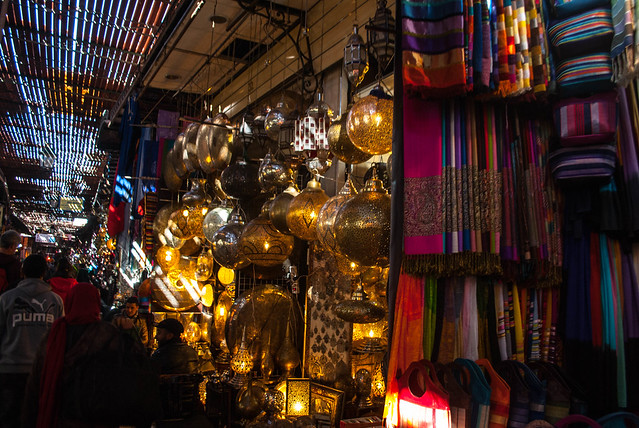
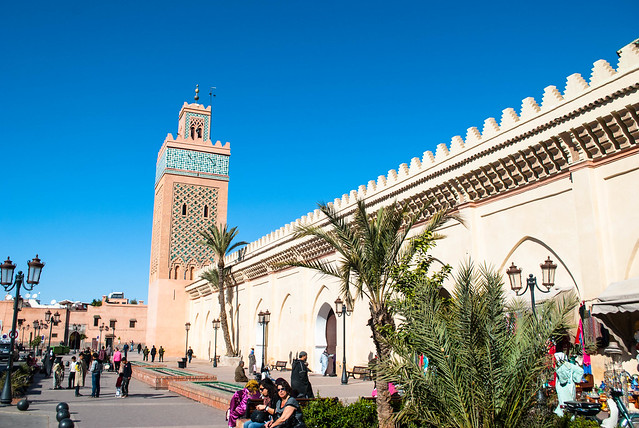
The time in Marrakesh was much more relaxed than when I was here in 2010, and I managed to find the way through the erratic streets. I even enjoyed some occasional bargaining in the souq, and had the opportunity to recognize once more the importance for the Spanish image of our football: many people wearing clothing of Real Madrid or Barcelona, graffitis with their logos, people in the zouq watching a Real Madrid match on tiny TVs, or a number of people watching Atletico-Barcelona in Café de Paris.
[AFG_gallery id=’3′]
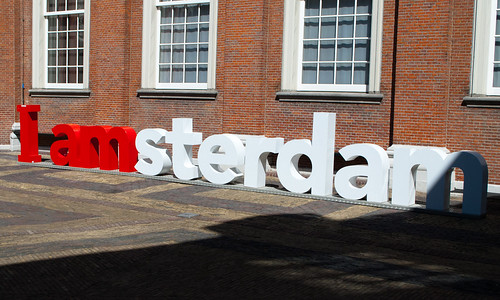
Visiting friends is one of my favorite excuses to choose travel destinations. It is nice as you get to see people who are normally a bit far away, you have local guides to show you the city, and you can actually see another city.
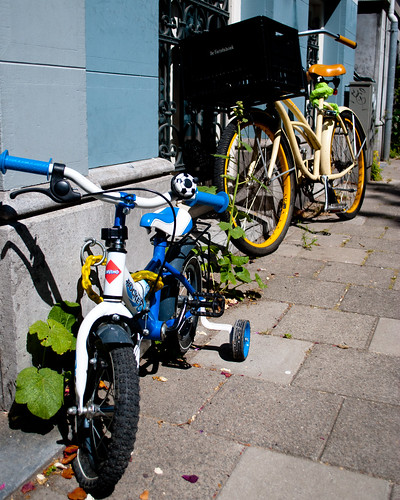
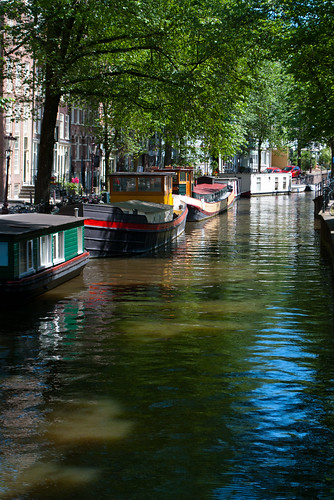
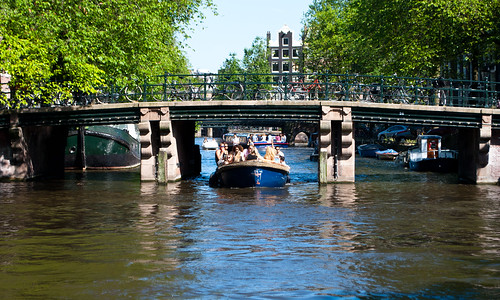
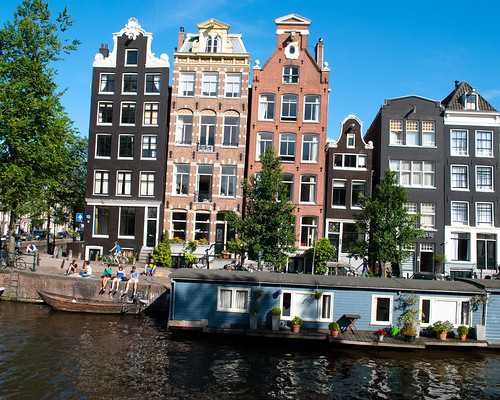
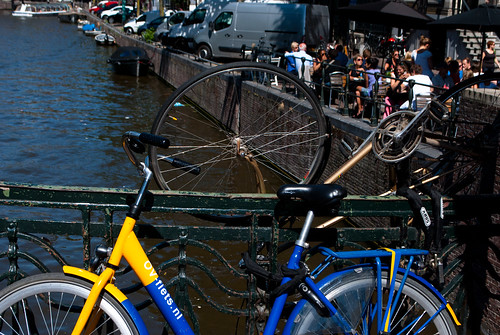
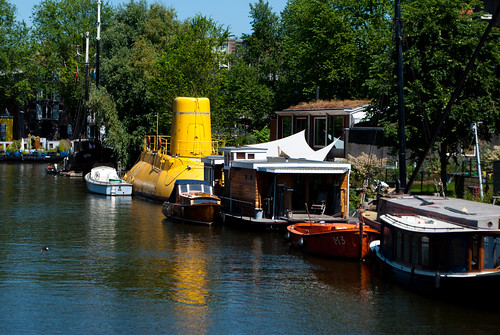
You can see in the pictures, there is a lot of light, and that is relative uncommon when you go to the north of Europe, and that could be felt in everyone there. People were happy, and channels looked like a busy road in Madrid on a workday, but instead of cars, there were hundreds of boats.
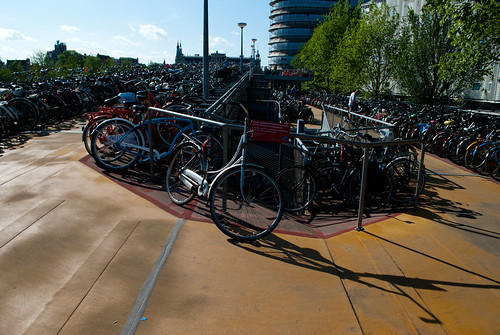
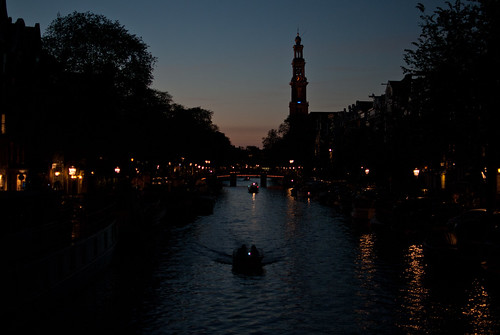
The channels make Amsterdam one of the nicest cities in Europe that I know, and the fact that it is completely flat, and bikes are the most extended mean of transportation for everybody, create a calm atmosphere difficult to beat.
[AFG_gallery id=’2′]